If you're looking for high-protein vegetarian lunch ideas that travel well and keep you full through the afternoon, you have plenty of genuinely satisfying options — no meat required. Beans, lentils, tofu, eggs, and dairy each supply substantial protein alongside fibre, vitamins, and minerals. The five combinations below are practical, packable, and varied enough to carry you through a full work week without boredom.
Why Protein at Lunch Matters
A protein-containing lunch helps maintain steady energy between meals and supports muscle maintenance throughout the day. The NHS Eatwell Guide recommends eating a variety of protein sources across the day and week, including pulses, eggs, dairy, and plant-based alternatives — all of which feature in the lunches below.
For more on building balanced meals around whole foods, the NutriPlan recipes library is a good starting point.
Five High-Protein Vegetarian Lunches
Lunch 1 — Spiced Lentil and Roasted Vegetable Wrap
What's in it: Cooked green or puy lentils (roughly 120 g cooked), roasted red pepper, courgette, and red onion, packed into a wholegrain wrap with a spoonful of Greek yoghurt and fresh coriander.
Protein sources: Lentils + Greek yoghurt
Estimated protein: ~20–22 g per serving (nutrition estimates vary by brand and exact portion; use NutriPlan's meal planner to log your specific ingredients)
Vegan swap: Replace Greek yoghurt with a thick plant-based yoghurt or hummus.
Prep note: Roast vegetables and cook lentils in batches at the start of the week. Assemble the wrap fresh each morning so it doesn't go soggy. Store lentils and roasted veg in separate airtight containers in the fridge and use within 48 hours, as advised by the Food Standards Agency. Freeze any portions you won't reach within that window.
Lunch 2 — Saag-Style Butter Bean and Spinach Bowl
What's in it: Canned butter beans (roughly 200 g drained), wilted spinach, tinned tomatoes, garlic, cumin, and smoked paprika, served over a small portion of cooked brown rice or with a wholegrain roll.
Protein sources: Butter beans + whole grains
Estimated protein: ~18–20 g per serving (estimate only)
Vegan swap: Already fully vegan.
Prep note: The bean and spinach base keeps well in the fridge for up to 48 hours. If serving with rice, follow FSA rice-specific guidance: cool cooked rice promptly (ideally within one hour), refrigerate for no longer than 24 hours, or freeze individual portions immediately for later days. Thaw in the fridge, reheat once until piping hot throughout, and eat straight away. Do not keep cooked rice in the fridge across a full week.
For flavour ideas to lift this dish further, see our guide to cooking with herbs and spices.
Lunch 3 — Smashed Chickpea and Avocado Salad Jar
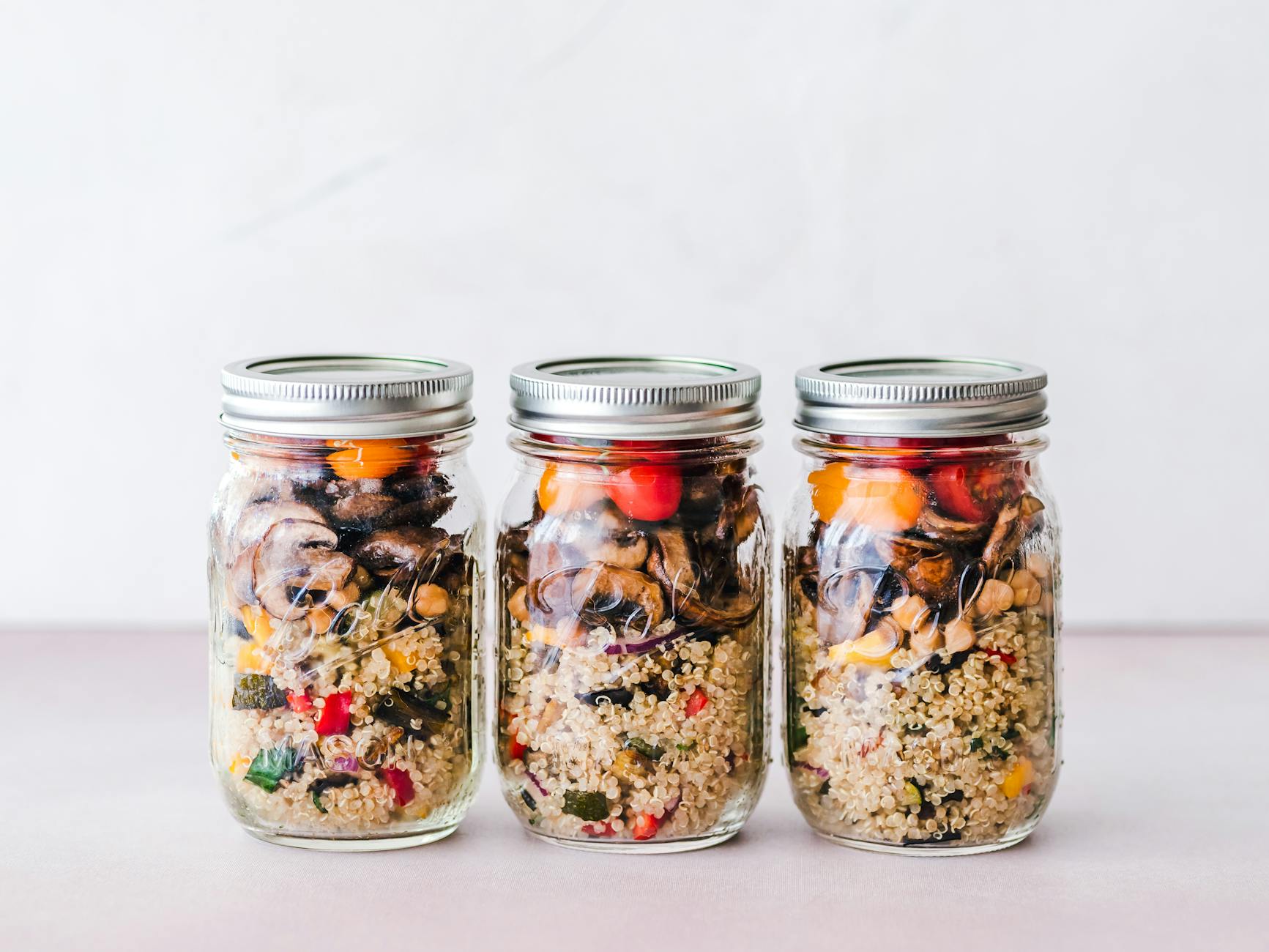
What's in it: Canned chickpeas (roughly 150 g drained), lightly smashed, with diced cucumber, cherry tomatoes, red onion, lemon juice, olive oil, and half a ripe avocado. Layer in a wide-mouth jar to keep crisp and moist ingredients separate until you're ready to eat.
Protein sources: Chickpeas + optional feta crumbled on top
Estimated protein: ~16–18 g per serving without feta; ~20–22 g with 30 g crumbled feta (estimate only)
Vegan swap: Omit feta or use a plant-based alternative. Avocado provides heart-supportive unsaturated fat — for more on why dietary fat is a valuable part of a balanced diet, see Healthy Fats Demystified.
Prep note: Assemble the jar the night before. Keep the avocado layer topped with a squeeze of lemon to slow browning.
Lunch 4 — Tofu and Edamame Sesame Noodle Box
What's in it: Firm tofu (roughly 150 g), pressed and cubed, pan-fried until golden; cooked soba or wholegrain noodles (roughly 80 g dry weight); frozen edamame (roughly 80 g, defrosted); shredded cabbage; and a dressing of tamari, sesame oil, rice vinegar, and a little grated ginger.
Protein sources: Tofu + edamame
Estimated protein: ~28–32 g per serving (estimate only; figures depend on tofu firmness and brand)
Vegan swap: Already fully vegan. Use coconut aminos instead of tamari if avoiding soy in the dressing (though note the tofu itself is soy-based).
Prep note: Press and fry tofu in a batch at the start of the week. Refrigerate within two hours of cooking and use within 48 hours or freeze promptly, per FSA guidance. If using soba noodles, cook fresh or store separately from the dressing to prevent clumping.
Lunch 5 — Herbed Egg and White Bean Grain Bowl
What's in it: Two soft-boiled or hard-boiled eggs, roughly 120 g canned cannellini beans, a handful of rocket, roasted cherry tomatoes, and a small portion of cooked farro or pearl barley, dressed with olive oil, lemon, and a generous handful of fresh parsley or basil.
Protein sources: Eggs + white beans + whole grain
Estimated protein: ~24–26 g per serving (estimate only)
Vegan swap: Replace eggs with 80 g of cubed, marinated tempeh or an extra 100 g of cannellini beans.
Prep note: Hard-boil eggs at the start of the week and keep them unpeeled in the fridge — they keep well for several days this way. Assemble the bowl fresh each day from prepped components.
Weekly Shopping List
| Category | Items | |---|---| | Pulses & Protein | Puy or green lentils, canned butter beans, canned chickpeas, canned cannellini beans, firm tofu, edamame (frozen), eggs | | Dairy / Alt | Greek yoghurt or plant-based yoghurt, feta (optional) | | Grains | Wholegrain wraps, brown rice, soba or wholegrain noodles, farro or pearl barley | | Vegetables | Courgette, red pepper, red onion, spinach, cucumber, cherry tomatoes, rocket, cabbage, avocado | | Herbs & Flavourings | Coriander, parsley or basil, garlic, ginger, lemon, cumin, smoked paprika, tamari, sesame oil, rice vinegar, olive oil | | Tinned / Jarred | Tinned tomatoes |
Canned pulses and frozen edamame are excellent budget-friendly choices. The NHS guidance on healthy eating on a budget highlights tinned and frozen options as nutritionally sound and cost-effective cupboard staples.
Practical Meal-Prep Tips
- Batch-cook grains and pulses on Sunday — but always cool promptly, refrigerate within two hours, and follow the rice-specific FSA rules above: refrigerate rice for a maximum of 24 hours or freeze immediately for later days.
- Keep components separate — dressings, grains, and proteins stored separately stay fresher and give you flexibility to mix and match across the week.
- Label and date containers so you always know what to use first.
- Freeze what you won't eat within 48 hours — batch-cooked lentils, the saag-style bean base, and fried tofu all freeze well in individual portions.
For a fuller approach to weekly planning, the NutriPlan blood-sugar-friendly meal prep guide covers component-based cooking in more detail.
FAQ
Can I hit my protein needs on a vegetarian diet without supplements? For most healthy adults, a varied vegetarian diet that includes pulses, eggs, and/or dairy can provide adequate protein across the day. If you have specific medical or dietary requirements, speak with a registered dietitian for personalised guidance.
How do I know if my portions are right for me? The protein estimates above are illustrative — actual values depend on exact brands, cooking methods, and portion sizes. NutriPlan's meal planner lets you log your specific ingredients to get a more tailored nutrition estimate. It is a recipe organiser with nutrition tracking, not a clinically validated diet service.
What if I don't like tofu? Tempeh (firm and nutty) or seitan (wheat-based, not suitable for coeliac diets) are good alternatives with comparable protein. Canned pulses are the most accessible swap if you'd rather skip soy-based proteins entirely.
Sources
- NHS Eatwell Guide — guidance on food groups and balanced eating across the day and week.
- NHS: Healthy Eating on a Budget — meal planning, shopping lists, and the value of tinned and frozen foods.
- Food Standards Agency: Cooking Your Food — food safety guidance on cooling, refrigerating, and reheating cooked food.
- FSA: Home Food Fact Checker — Rice — specific guidance on safe storage and reheating of cooked rice.
Recommended Products
As an Amazon Associate, NutriPlan earns from qualifying purchases — at no extra cost to you.
- Digital Kitchen Food Scale — A kitchen tool for measuring recipe ingredients.
Disclaimer: This article is for informational and educational purposes only and does not constitute medical advice. The information presented is based on publicly available research and general nutritional principles. Always consult a qualified healthcare professional before making changes to your diet, especially if you have an existing medical condition or are taking medications.